




How to Choose the Right Work Boots for Your Trade
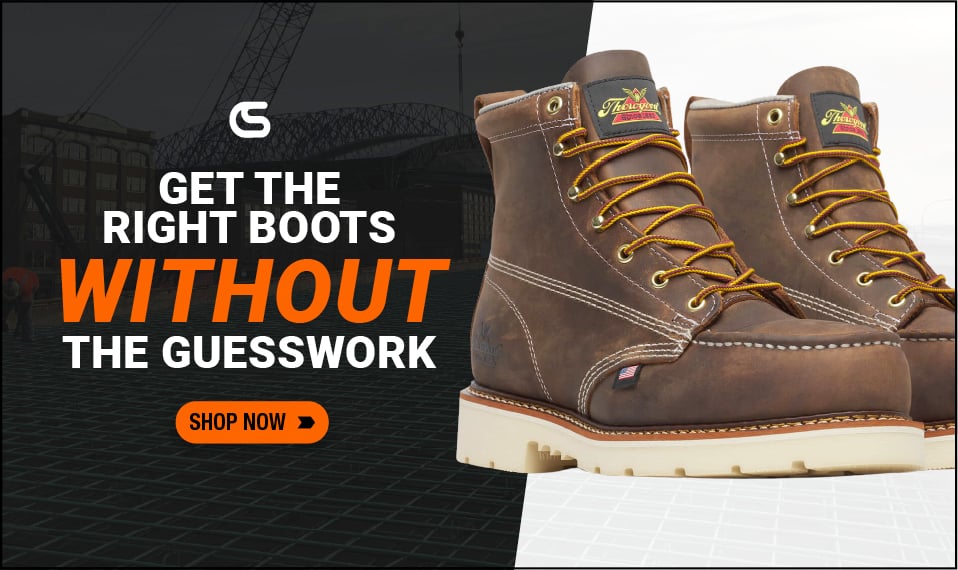
This week our Gear Experts® are here to talk about work boots. Whether you call them safety boots or work boots, protecting your feet is an essential part of on-the-job safety.
Your feet clock more hours than any tool on the truck. Pick the boot that keeps up.
Here's the uncomfortable math: you'll stand, climb, and grind on your boots for roughly 2,000 hours this year. The wrong pair shows up as sore arches by lunch, a slip you didn't see coming, or a toe cap that fails the one time it mattered. The right pair, you forget you're wearing.
So how do you land on the right pair without buying three wrong ones first? You match the boot to the job, not to the logo. Here's how to do exactly that, trade by trade, in about the time it takes for your coffee to cool.
Start with the hazard, not the style
Every good boot decision starts with one question: what is most likely to hurt your foot on site? Answer that, and the rest of the spec sheet gets a lot shorter.
Dropping heavy material? You need a rated toe. Working around live circuits? You need electrical hazard protection. On your knees in mud and standing water? Waterproofing moves to the top of the list. Nail your top hazard first, then layer in comfort and fit. Do it the other way around and you end up with a great-feeling boot that fails the job.
Steel toe vs. composite toe: which safety toe do you actually need?
Both protect against impact and compression. The difference is what they're made of and how they behave on the job.
Steel toe is the classic. It's thinner for the same protection, it takes a beating, and it usually costs less. The trade-offs: it conducts temperature, so it runs cold in winter and hot in summer, and it sets off metal detectors.
Composite toe is built from materials like carbon fiber or plastic. It's lighter, it doesn't conduct heat or cold, and it's non-metallic, which matters if you're passing through security or working around sensitive equipment. The trade-offs: it's a touch bulkier and often costs a little more.
Quick rule: if you clear metal detectors daily or work in temperature extremes, go composite. If you want maximum protection for the lowest cost and don't mind the weight, steel earns its keep.
What do the ASTM ratings on the box actually mean?
The alphabet soup on the label is your protection, spelled out. In North America, protective footwear is tested to the ASTM F2413-24 standard, the current revision that replaced F2413-18 in June 2024. Older inventory may still carry the F2413-18 mark. Here's the plain-English version of what you'll see:
- I/75 and C/75: impact and compression protection at the toe. This is your core drop-and-crush defense.
- EH: electrical hazard. Adds a layer of protection against contact with live circuits on dry surfaces. Non-negotiable for electrical and utility work.
- Mt: metatarsal guard. Protects the top of your foot, not just the toe. Reach for it around heavy rolling or falling loads.
- PR: puncture resistant. A plate or textile layer that stops nails and sharp debris from coming up through the sole.
- SD: static dissipative. Bleeds off static charge in environments where a spark is a real problem.
You don't need every rating. You need the ones your hazard assessment calls for. When in doubt, check your site's safety requirements or ask a Gear Expert before you buy.
Match the boot to your trade
Here's the shortcut. Find your work below and start there:
- At-Height & Tower Climbers: Lightweight matters when you're carrying your own weight up 300 feet. Composite toe, high ankle support, and a defined heel that indexes securely on rungs or pegs. Every ounce counts on the ladder.
- Industrial Construction & Steel: Rated toe (steel or composite), puncture-resistant sole, and aggressive tread for mixed terrain. Add a met guard if you're handling heavy iron or rigging.
- Electrical & Utility (Lineman): EH rating is the whole ballgame. Look for non-conductive construction, steep heel breasts for pole climbing, and a comfortable fit for long days in the bucket or on the pole.
- Renewables (Wind & Solar): Long shifts, variable terrain, and weather exposure. Prioritize waterproofing, arch support, and a tread that grips both a gravel access road and a slick platform.
- MRO & Warehouse: Concrete all day. Cushioning and arch support beat everything. A slip-resistant, oil-resistant outsole is your best defense on polished floors.
Waterproof or breathable? You can have both, but know the difference
Fully waterproof boots keep standing water out, which is exactly what you want in mud, snow, and wet trenches. The trade-off is they breathe less, so in dry heat your feet can sweat.
Breathable boots move air and dry fast, which wins on hot, dry sites. But they'll wet through in a downpour. Membrane-lined boots split the difference and are the safe default if your conditions swing. Match this to your environment and season, not to a marketing claim.
Fit is a safety feature, not a comfort perk
If your boot slides around internally, your risk of trips, twisted ankles, and hot-spot blisters skyrockets. Try your boots on at the end of the shift when your feet are at their largest. Make sure you wear the exact socks you wear on the job, and test for zero heel slip while keeping roughly a half-inch of room in front of your toes.

How long should a good pair last, and how do you stretch it?
A quality pair of work boots, worn daily and cared for, generally lasts most crews somewhere between six months and a year, depending on the trade and the terrain.
You can get more life out of them by:
- Rotating two pairs so each set fully dries out between shifts.
- Cleaning off mud, chemicals, and corrosive material at the end of the day.
- Conditioning and re-treating the leather regularly.
When the tread is worn smooth or the protective toe cap becomes exposed, the boot is done. Retire it. That's no longer just wear and tear—it's an active safety hazard.
The 60-second decision
If you only remember one thing: pick your top hazard, get the rating that covers it, then choose the toe type and waterproofing for your climate, and size at the end of the day. That's the whole game.
Not sure which pair fits your trade? That's what Columbia Safety and Supply is here for. Our Gear Experts sort this out for crews every day, and we'll get you into boots that keep up with the hours you put in.
Frequently Asked Questions
How do I choose the right work boots?
Start with your biggest hazard on site, then match the safety rating to it. Choose your toe type and waterproofing for your climate, and size at the end of the day for the best fit. Match the boot to the job, not the brand.
What is the difference between steel toe and composite toe?
Both meet the same ASTM F2413-24 impact and compression protection. Steel toe is thinner and usually costs less, but it conducts temperature and sets off metal detectors. Composite toe is lighter and non-metallic, which is better for temperature extremes and security checkpoints, though it runs slightly bulkier and often costs a bit more.
What does EH rated mean on work boots?
EH stands for electrical hazard. An EH-rated boot adds a layer of protection against contact with live electrical circuits on dry surfaces. It is essential for electrical and utility work and is defined under ASTM F2413-24.
What do ASTM boot ratings mean?
ASTM F2413-24 is the current U.S. standard for protective footwear. I/75 and C/75 cover impact and compression protection at the toe. Additional codes include EH (electrical hazard), Mt (metatarsal guard), PR (puncture resistant), and SD (static dissipative). You only need the codes your hazard assessment calls for.
How should work boots fit?
Try boots on at the end of the day when your feet are largest, wearing your work socks. You want about a thumb's width at the toe and zero heel slip. A rated toe cap does not flex, so if it pinches in the store it will pinch on site.
How long do work boots last?
Worn daily and cared for, a quality pair generally lasts most crews six months to a year, depending on trade and terrain. Rotating two pairs, cleaning off corrosive material, and re-treating leather all extend their life. When the tread is smooth or the toe cap is exposed, replace them.
Choosing the right work boots requires matching ASTM F2413-24 safety ratings to specific job site hazards, prioritizing toe protection and outsole tread based on your trade's terrain. Columbia Safety outfits ironworkers, steel erectors, and industrial construction crews with heavy-duty safety boots from Keen Utility and Timberland PRO, backed by dedicated Gear Experts® on staff who work the trade. Browse our Work Boots collection to protect your team from heavy impact on the steel, or talk to a Gear Expert® about crew-wide gear standardization.